Skip to the contents

Moomba, Melbourne · March 1977

In 1977 Melbourne crowned Mickey Mouse King of Moomba

Hundreds of thousands watched him ride down Swanston Street in an open car, and at Princes Bridge a clown pushed a pie into his face. It was the end of a love affair that began in 1934 with a crate of wallabies. Derham Groves’s Walt Disney’s Forgotten Australia tells the whole of it, and this is its Australian side.

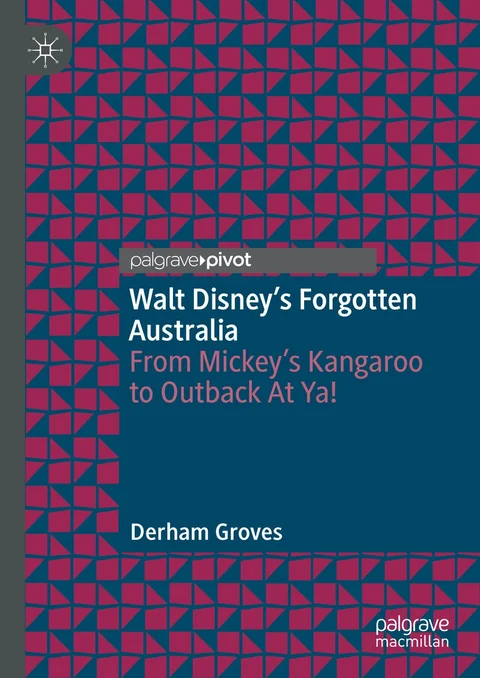
The cover of Walt Disney’s Forgotten Australia: the title and Derham Groves’s name in white and pink on a blue panel, framed by a pattern of crimson triangles.Walt Disney’s Forgotten Australia
Derham Groves. Palgrave Macmillan, 2025
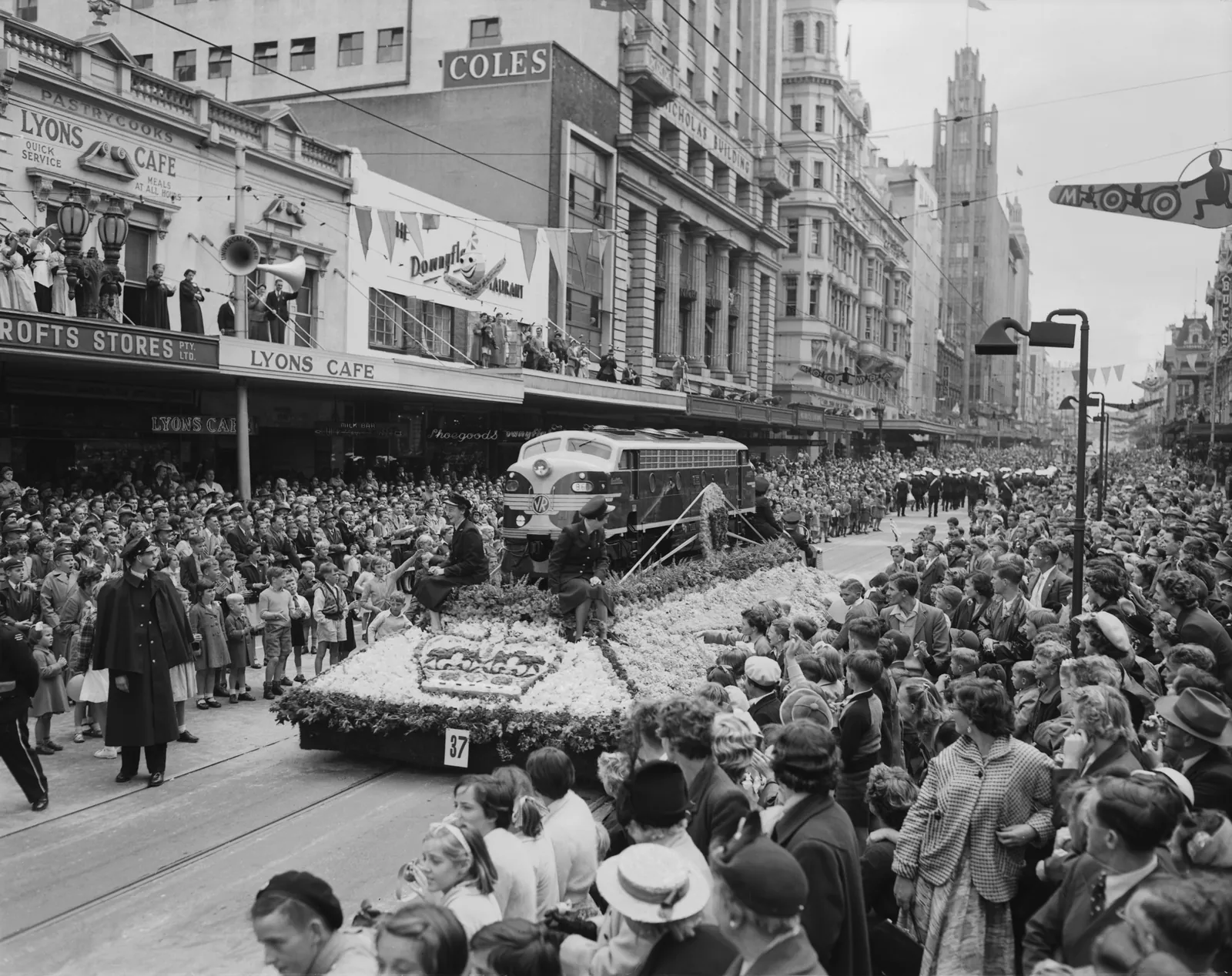
Swanston Street packed from the kerb to the shop verandas as a float of flowers carrying a model diesel locomotive passes behind a band; Moomba’s banners and bunting hang over the street, and the Manchester Unity building rises at the end of it.
The first Moomba procession, Swanston Street, Monday 14 March 1955: the Victorian Railways’ floral float, and Moomba’s own signs over the street. King Mickey came down the same street in 1977. Victorian Railways; State Library Victoria, H91.330/4269

The book, chapter by chapter

Contents

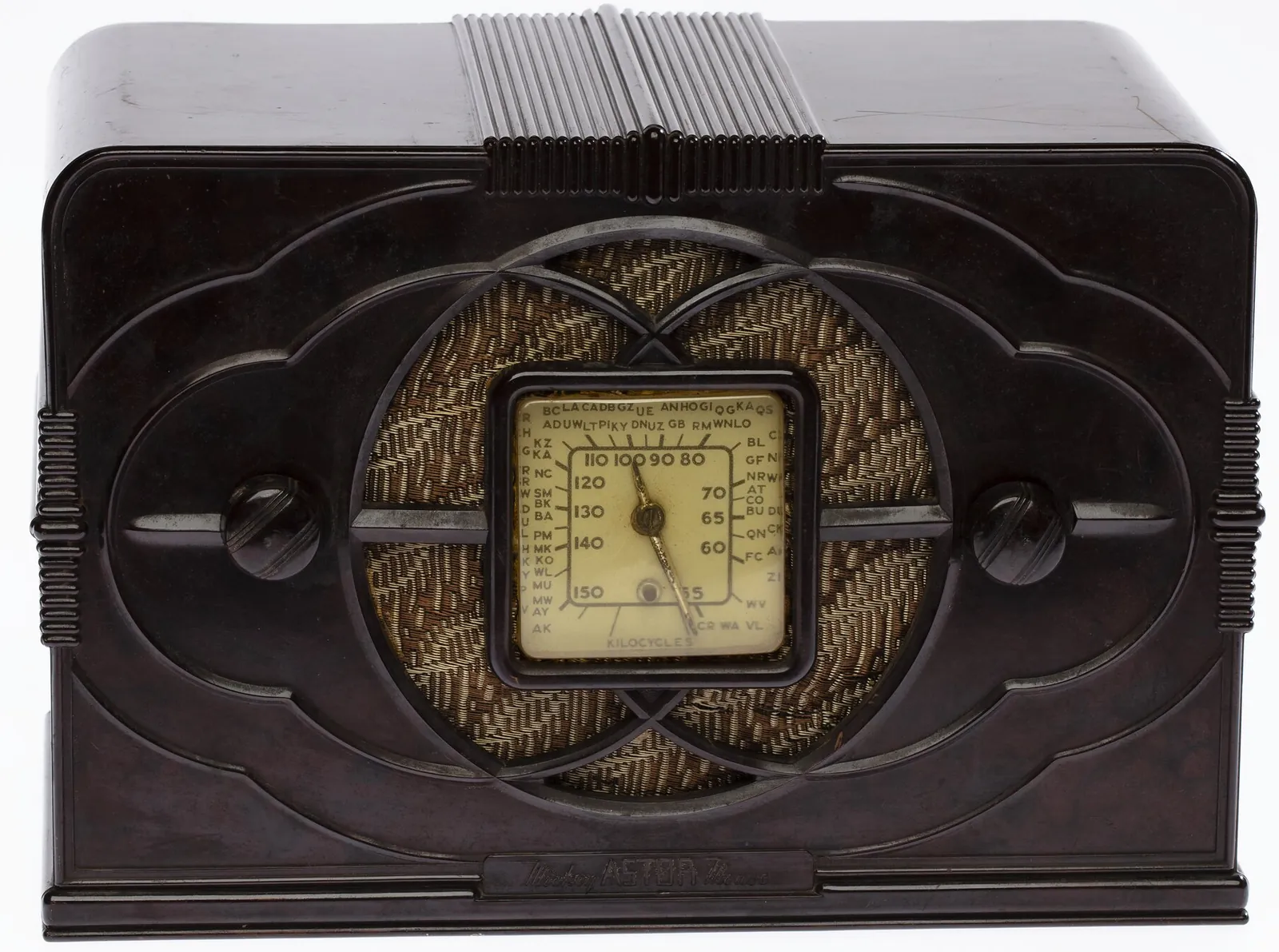
The dial pinned over the chapters is drawn from an Astor Mickey’s, the little radio made in South Melbourne (chapter 3), with years where it had kilocycles. Its needle points to the year of the section you are reading, and the stations round its edge are the sections, one ring a chapter. The book tells the story three times, once a chapter, so the needle goes round three times, and it comes to rest on 1977.

Chapter 1 1934–2019 page 1

Australia Through Disney Eyes

Disney’s Australia on the screen and the page, from Mickey’s Kangaroo in 1935 to Outback At Ya! in 2019: cartoons, comics, nature films, live-action features and television. The picture was consistent, Groves writes, and “somewhat skewed and simplistic”: boxing kangaroos, irate “ostriches” and boomerangs out of control in the cartoons, and in the live-action films an Australia like Main Street in Disneyland. First Nations people were “largely absent from Disney productions about Australia, even when the filmmakers wanted to include them”. It carried weight all the same, because Disney had been everywhere in Australian life since the early 1930s.

Sources Chapter 1’s abstract, Springer.

Mickey’s Kangaroo

1934–35p. 3

Leo Buring, the Sydney wine merchant, saw posters for six Mickey Mouse films outside a picture theatre in Swanston Street, Melbourne, half the programme, and wrote to Walt Disney that he would bring him some wallabies. He sailed on the Mariposa on 30 May 1934; the ship’s manifest, Groves found, listed “140 hogsheads of wine, four cases of whisky, and one crate of wallabies”. Two went into the crate, Leapo and Hoppo, and a third, a joey the papers called Poucho, was found in Hoppo’s pouch at Disney’s studio.

“I thought it would be a good idea if Disney made a film of the kangaroo, especially as his work was appreciated so much in Australia.”

Disney made it. In Mickey’s Kangaroo, released in April 1935, a crate arrives from Australia tagged “To Mickey Mouse, Hollywood. From Leo Buring, Australia”, and out come a boxing kangaroo and her joey. The Australian prints were dedicated to Mickey’s Australian audiences. It opened at Hoyts Regent in Sydney in August 1935, at the Regents in Adelaide and Melbourne after it, and at country picture shows for two years; at the Ozone in Port Pirie it was “preceded by a few introductory sentences” thanking Buring for his gift. John Sands Ltd of Sydney printed the book of the film.

None of the animals lived long in California. By 1941 all three had died, but the studio kept the skin of one, and Buring kept some of the drawings Disney sent him.
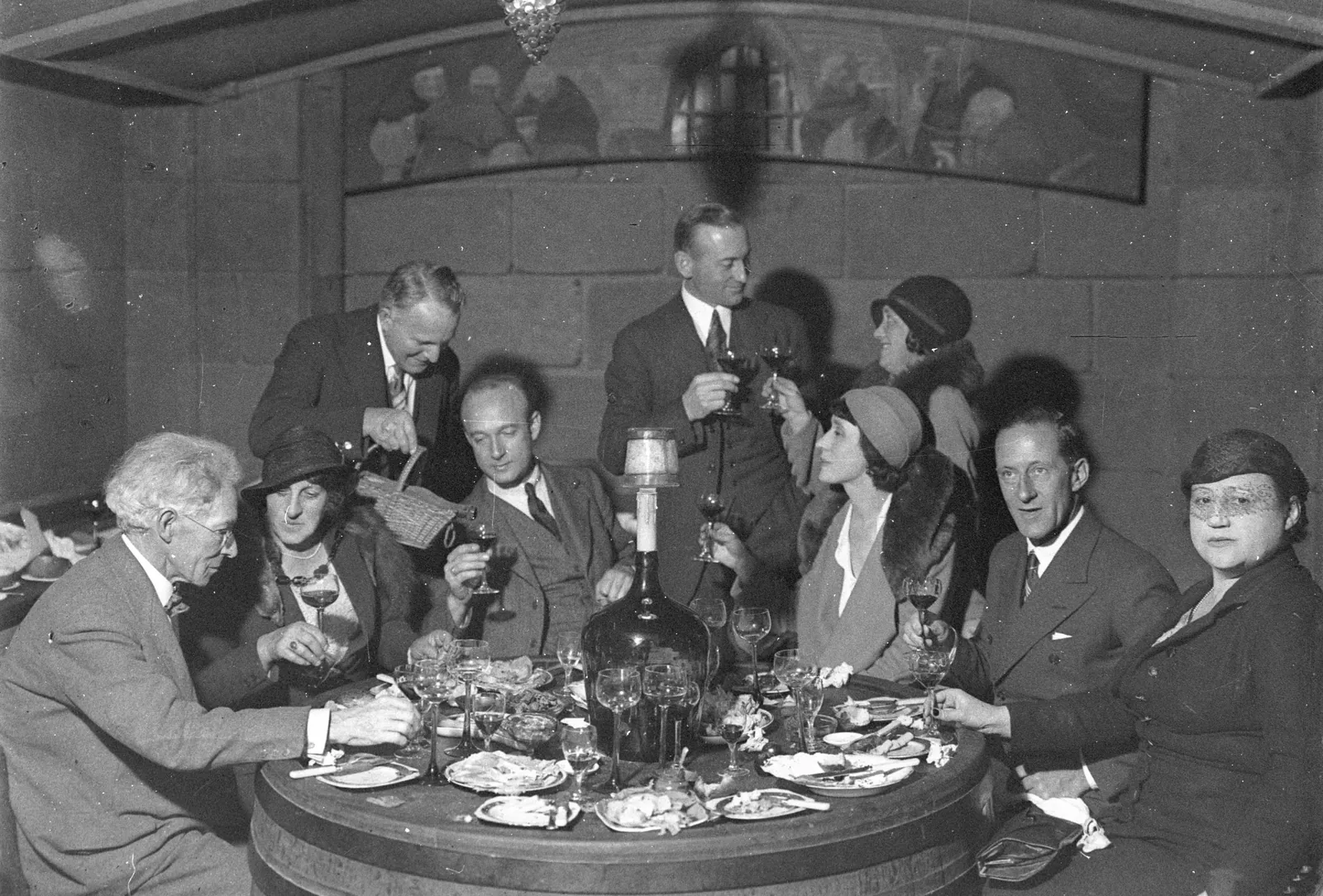
Leo Buring, standing at the left, pours from a wicker-cased bottle for eight guests round a barrel-top table in a vaulted cellar, the men in suits and the women in cloche hats raising their glasses under a mural of monks.
Leo Buring pours at his cellar, Ye Olde Crusty, in George Street, Sydney, in the 1930s. Sam Hood; Mitchell Library, State Library of New South Wales, Home and Away 7454

More Kangaroos Plus a Dodgy “Emu”

1943–49p. 7

Disney kept coming back to the kangaroo. At Christmas 1943, with American servicemen all over Australia, The Australian Women’s Weekly ran a strip by the studio, “Field Exercises”, “specially drawn for our Christmas issue”. In 1947 Carl Barks sent Donald Duck and his nephews to the Outback in the comic “Adventure Down Under”, which W. G. Publications of Sydney reprinted here for ninepence in 1949, two pages short.

In 1948 came Daddy Duck, in which Donald adopts a joey, and Mickey Down Under, in which Mickey and Pluto gather bananas with a boomerang and try to take an egg from a watchful emu. It played George Street in Sydney that winter, between Night Song and Big Game Hunting. The emu is the book’s dodgy one: among the clichés of Disney’s Australia, Groves counts irate “ostriches”.

Nature’s Strangest Creatures

1944–59p. 9

Australian governments asked Disney to come long before he sent anyone. In 1944 Arthur Calwell, the Minister for Information, hoped Disney would bring “a unit of his organisation” to make an animated film about the Commonwealth; Waltzing Matilda appealed to him, and so did Aboriginal art. The letters went on under Chifley and Menzies. In 1949 Disney named what interested him: kangaroos, eucalyptus trees, dingoes, Aboriginal people and the koala.

“The only reason we haven’t used the Koala before is because none of the boys know how they move.”

In 1952 he sent a scout, Bob Skene, a polo player from a Dungog family who had met him at polo, and Skene went home recommending “a special film unit”. Alfred and Elma Milotte, who had made Disney’s Academy Award-winning nature films, landed in Sydney in May 1955 and stayed two years: in Queensland, at David Fleay’s sanctuary at West Burleigh, where two baby platypuses a bulldozer turned up at Laidley were brought to them; in Central Australia; and for thirteen months in Tasmania, where they built a blind and a tank for the platypus. Nature’s Strangest Creatures, sixteen minutes of platypus, kangaroos, wallabies, a giant bat and the possum, came out in 1959 and reached Australian picture theatres in 1960, supporting Darby O’Gill and the Little People.

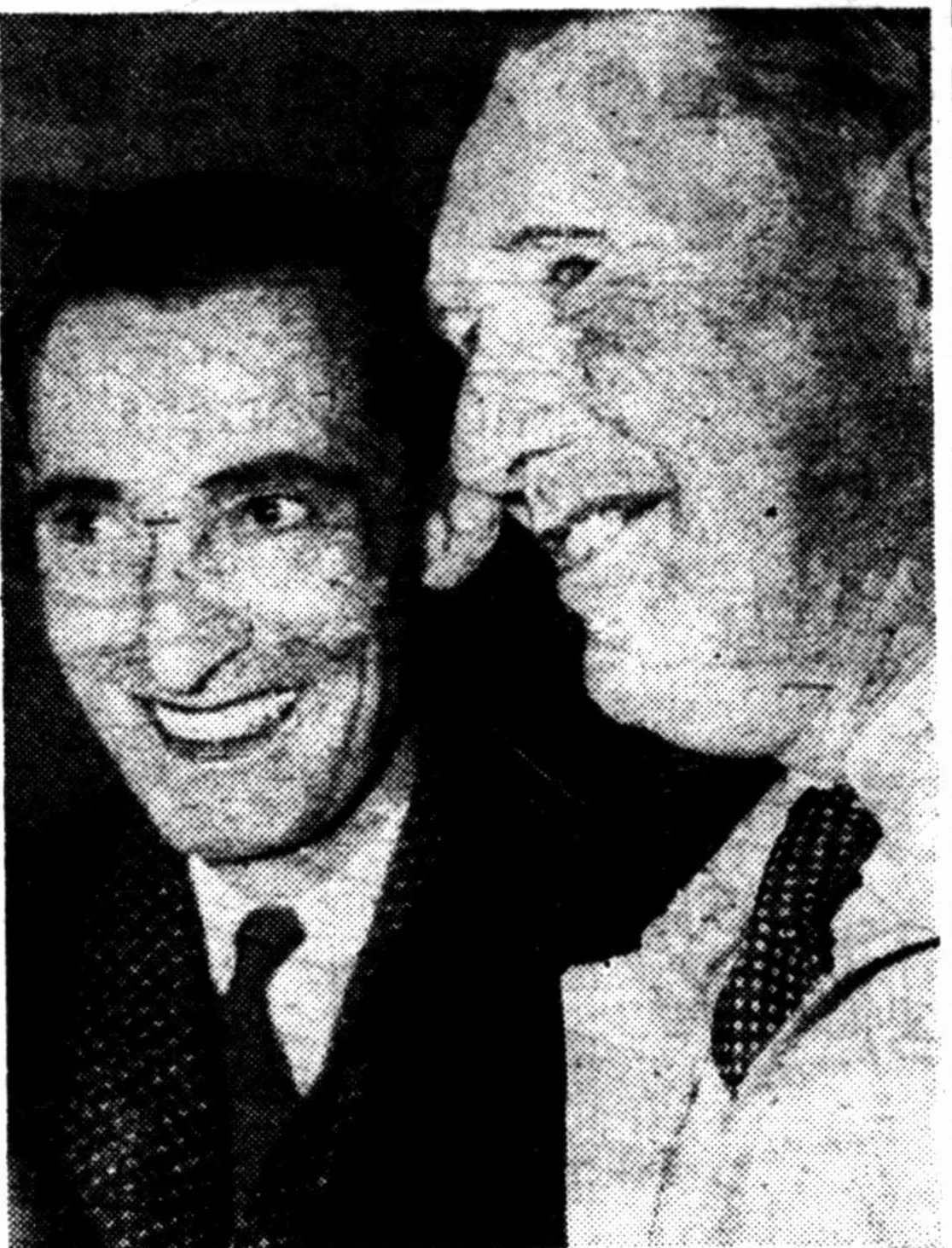
A newspaper photograph of two men in suits, smiling, cheek by jowl: Bob Skene on the left and Geoff Ashton on the right.
Bob Skene, Disney’s scout, met at Mascot by the polo player Geoff Ashton, September 1952. Brisbane Telegraph, 26 September 1952, page 6, via Trove

Ride A Wild Pony

1974–75p. 16

The first Disney feature filmed in Australia was made at Chiltern, in north-east Victoria, in 1974. The town played “Barambogie”: its main street was rebuilt and painted as it had been in the 1920s, and nearly everybody in Chiltern was an extra at the fete in Chiltern Park, for up to $27 a day. The poor farm and the rich family’s station were in New South Wales, in the Horton Valley and at Belltrees in the Upper Hunter.

Robert Bettles, a Sydney boy of twelve, played Scotty, whose pony is claimed by a rich girl who has had polio. John Meillon played the town’s solicitor, and his own son, John Meillon Jr, played his son. Ride a Wild Pony opened here at Christmas 1975, and The Australian Women’s Weekly gave away two ponies in a colouring contest.

Born To Run

1976–79p. 21

The director Don Chaffey and Robert Bettles came back in 1976 for another, shot in the Upper Hunter Valley: a boy, Teddy, raising a colt for the trots to save his grandfather’s farm. Tom Farley, Andrew McFarlane, Julieanne Newbould, Kit Taylor and John Meillon were in it, and Geoff Burton photographed it. It went out in Australia as Harness Fever.

The Voyage to the Valley of the Emu

1978p. 26

Disney’s own title was Journey to the Valley of the Emu: an hour of The Wonderful World of Disney, directed by Roy E. Disney and first shown on NBC in January 1978, in which an Aboriginal boy, Wadjiri, played by Victor Palmer, rescues a dingo pup and sets out with it across the Outback for the valley of the emu. Seven showed it here the same year, in its Wonderful World of Disney slot.

Five Mile Creek

1983–85p. 28

The Disney Channel and the Seven Network made it here together: thirty-nine episodes about a coach way station of the 1860s on the road between the gold town of Wilga and Port Nelson. Its towns were built in the bush north of Sydney, around Frenchs Forest and Belrose, and for the third series, when no studio was free in Sydney, a whole town called Emu Plains went up outside Melbourne. George Liddle designed them.

Liz Burch, Rod Mullinar, Michael Caton and Martin Lewis were in it, and Nicole Kidman, who left school at the start of her HSC year to act in it. Seven gave Melbourne eleven episodes in 1984; Sydney had to wait until April 1985.

The Rescuers Down Under

1990p. 36

Disney’s first feature made entirely on its new computer system was set in the Outback: Bernard and Bianca fly out to save a boy, Cody, from a poacher. Their guide, Jake, a kangaroo mouse, is Tristan Rogers, born in Melbourne and famous in America as Robert Scorpio of General Hospital. The art director and six animators spent several days at Uluru, Katherine Gorge and Kakadu. Some of the story artists wanted an Aboriginal child to voice Cody; according to Brenda Chapman, who worked on the film, Jeffrey Katzenberg overruled them. It reached Australian cinemas in the winter school holidays of 1991.

Mickey and Goofy Down Under

1986–90p. 40

Not a film but a picture book in Disney’s Small World Library (Grolier, 1990): after the koalas at the zoo, Mickey and Goofy go to Australia for eucalyptus leaves. Groves sets its dingoes beside Evil Angels, the 1988 film of the Chamberlain case, and beside Expo Oz, the platypus in a slouch hat and safari suit that Disney’s Imagineers designed as the mascot of World Expo 88 in Brisbane. Expo Oz made his debut at the Queensland Cultural Centre in November 1986 and on 30 April 1988 led the crowd to the opening, “a 1.5m Disney-style platypus”.

Finding Nemo

2003p. 43

Pixar’s film for Disney is set on the Great Barrier Reef, in the East Australian Current and in Sydney Harbour, where Nemo ends up in a dentist’s fish tank. Barry Humphries is the shark Bruce, Geoffrey Rush the pelican Nigel, Eric Bana and Bruce Spence the sharks Anchor and Chum, and Bill Hunter the dentist. Its artists learned to dive to study the reef, and the Australian Tourism Commission and Queensland put the film to work in their campaigns.

Outback At Ya!

2019p. 47

The book’s subtitle ends on a five-minute cartoon from Disney Television Animation’s Mickey Mouse series, first shown in April 2019, in which “Mickey’s desire to throw a boomerang creates a series of dangerous, unintended consequences”: the out-of-control boomerang again, eighty-four years after the kangaroo. Groves wrote to Paul Rudish, one of its writers, and to the series’ composer, Christopher Willis.

More Disney Employees From Down Under

1940–83p. 48

Australians in Disney’s pictures: the Sydney cellist Lauri Kennedy, who recorded for Fantasia; Peter Finch, the Sheriff of Nottingham in Disney’s Robin Hood (1952) and Alan Breck in Kidnapped (1960); P. L. Travers, born at Maryborough in Queensland, whose Mary Poppins Disney filmed in 1964; Leo McKern in Candleshoe; Laurie Main of Melbourne, who narrated the Winnie the Pooh featurettes; and Helen Reddy, who sang at Disneyland in 1971 and 1972 and starred in Pete’s Dragon in 1977. “Surprises abound,” the book’s foreword says: “Helen Reddy! Nicole Kidman!”

Chapter 2 1938–2008 page 67

Not Quite Disney Down Under

Disney in Australia beyond the cartoons and films: the voices that came on tour, the ambassadors sent after Disneyland opened in 1955, Disney on Parade (“Disneyland on wheels”, the book calls it), the Australians hailed as the local Walt Disney, the Disneylands Australia nearly got, and Disney in Australian art.

Sources Chapter 2’s abstract, Springer.

Snow White and the Seven Dwarfs

1938–39p. 69

Snow White and the Seven Dwarfs had its “grand Australasian gala premiere” at Hoyts Plaza in Sydney on Friday 27 May 1938; by its seventh week 150,000 people had seen it, and it ran about twenty. Perth had it in June. Melbourne came last, at the Plaza on 1 October, and Swansea, on Tasmania’s east coast, had its own premiere on 23 December. Shops sold Snow White toys, tea towels and frocks, and towns put it on as an operetta. In December Adriana Caselotti, Snow White’s voice, opened in Melbourne in a stage Snow White for Frank Neil’s Tivoli circuit, while she was suing Disney over the royalties from the records. Other voices followed: Jack Dale, Cock Robin, and in 1951 and 1952 Cliff Edwards, Jiminy Cricket.

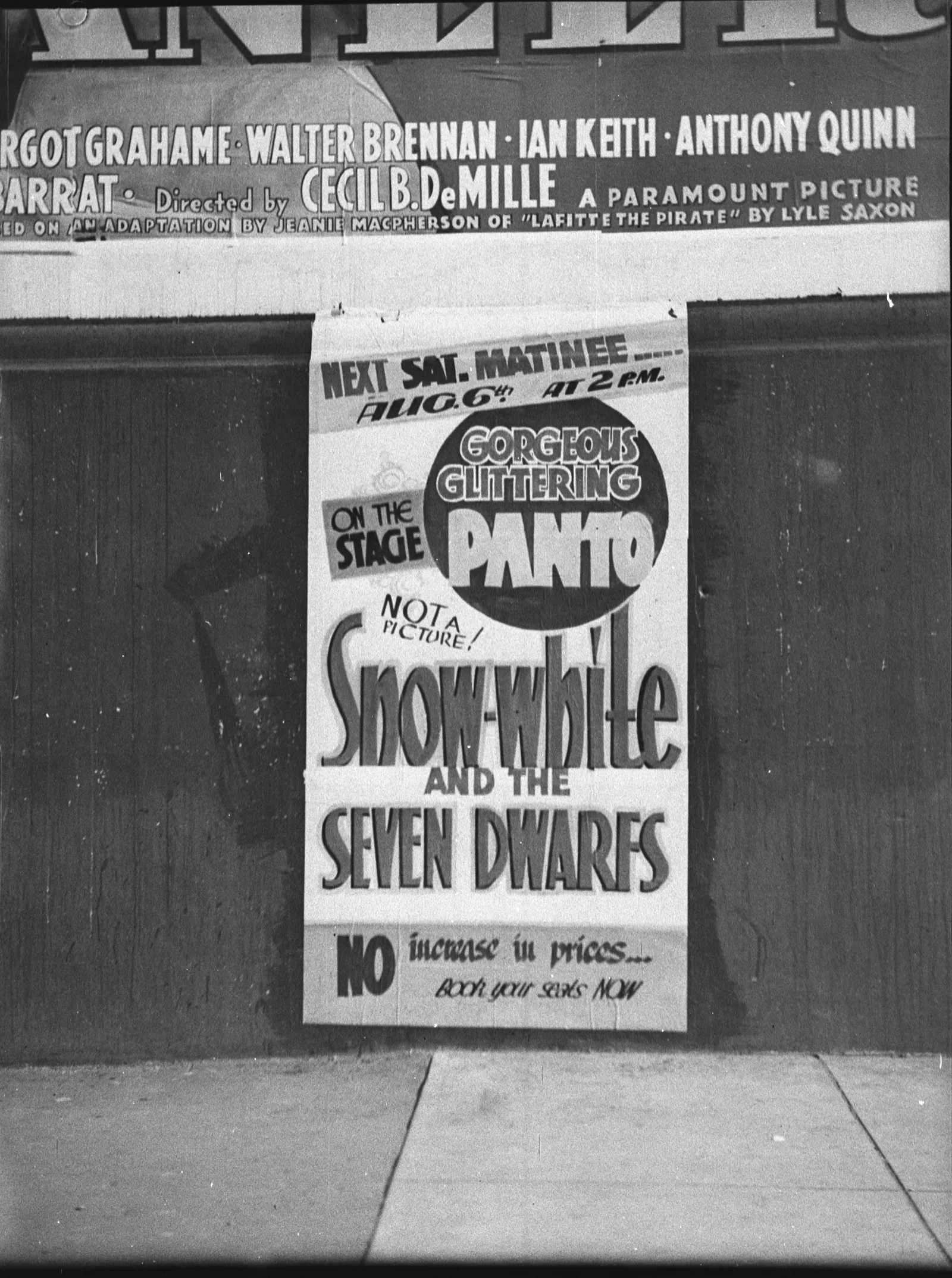
A hand-lettered show card pasted to a picture theatre’s wall: next Saturday’s matinee, August 6th at 2 p.m., on the stage, a gorgeous glittering panto, not a picture, Snow-white and the Seven Dwarfs, no increase in prices, book your seats now.
“Not a picture!”: Snow White as a pantomime on the stage of the Stanmore picture theatre, Sydney, August 1938. Hood studio; Mitchell Library, State Library of New South Wales, Home and Away 18519

Disneyland Ambassadors

1965–73p. 74

Disneyland opened in California in July 1955, and Disney sent ambassadors to spread the word. Julie Reihm, “Miss Disneyland”, chosen from 138 candidates, came to Australia for the park’s tenth birthday in August 1965; Myer had her as the special attraction at its Toowoomba store. In 1973 Bonnie Drury, a ride operator at the park, came and toured hospitals and schools.

Disney on Parade

1971–72p. 77

The arena show was made in Australia with TVW 7 in Perth, Michael Edgley and Bullen Brothers’ circus, the first Disney on Parade produced outside America. It opened in 1971 under a tent of about 5,000 seats at Perry Lakes in Perth and went on to Adelaide, where NBC taped it for American television, to Albert Park in Melbourne, and in 1972 to Wentworth Park in Sydney: more than a million people saw it. A new production toured in 1975 and 1976, the American Bicentennial year, when the Movement Against Repression called it “blatant cultural imperialism”. There was no season in 1977.

Not Quite Walt Disney

1939–2006p. 83

Australia kept finding its own Walt Disney. The papers gave the name to Eric Porter of Sydney in 1939, for his Willie Wombat; to the illustrator Jack Baird in 1940; to Will and Harry Owen of Ferntree Gully, making animated films, in 1946; to Jimmy Bancks of Ginger Meggs, mourned in 1952 by the Premier of New South Wales as “Australia’s Walt Disney”; and to Peter Scriven of the Tintookies in 1959.

Others went to work for the real one. Ken O’Connor, born in Perth and trained at Melbourne Technical College, laid out and art-directed Disney features from Snow White on. Frank Armitage of Geelong painted backgrounds for Sleeping Beauty. Jean Fowler, whose parents lived in Mosman, spent eleven years as an assistant animator on effects, the “pixie dust” round Tinker Bell among them. From 1988 Disney ran its own animation studio in Sydney, which made the sequels to its features until it closed in 2006.

Not Quite Disneyland

1960–2008p. 89

In 1960 Melbourne developers took an option on 500 acres at Laverton, beside the Princes Highway, for “Australialand”, and brought out Harper Goff, who had designed parts of Disneyland, to plan it. Manly Council sent its former mayor to America the same year to ask Disney for one. In 1967 Canberra proposed a Disneyland-style park beside Lake Burley Griffin, with the Man from Snowy River, Ginger Meggs and Peter Pan. Dreamworld opened on the Gold Coast in 1981, and in 2007 and 2008 the company itself looked at White Bay in Sydney for a “Disney Wharf”. There is still no Disneyland in Australia.

“Alright. So perhaps this ‘love affair’ has been a bit one-sided.”

Not Quite Disney Art

1943–2002p. 99

Disney’s characters turn up in Australian art from the war on. In Charles Bush’s Moresby picture show (1943), at the Australian War Memorial, soldiers in New Guinea watch a Donald Duck cartoon. Martin Sharp put Mickey on the cover of Oz in London in 1969 and into his paintings after it; Richard Larter set Disney’s characters among his pin-ups; and Destiny Deacon’s Where’s Mickey? (2002) is in the Museum of Contemporary Art in Sydney.

Chapter 3 1927–1977 page 115

Heads Like Mice

Fifty years of Mickey Mouse in Australian everyday life, from an airline named after him to his coronation as King of Moomba: a radio and a High Court case, Mickey and Minnie married on stage again and again through the 1930s, Mickey on the radio and then on television. The children who watched him on television in the 1950s, Groves notes, had parents who listened to him on the radio in the 1930s.

Sources Chapter 3’s abstract, Springer.

I Hear of Mickey Everywhere

1927–52p. 117

The title is Mycroft Holmes’s greeting to Watson, “I hear of Sherlock everywhere”, with Mickey for Sherlock (Groves is a Sherlockian too). Mickey reached Australian screens at the Lyceum in Sydney in July 1929, “ALSO MICKEY THE MOUSE”, and was soon everywhere. Horrie Miller’s airline in Western Australia, MacRobertson-Miller, began in the late 1920s and came to be called Mickey Mouse Airlines after its initials, MMA. A lantern slide from Mawson’s Antarctic voyage of 1930–31 is titled “Mickey Mouse & Adelie Penguins, Cape Denison”, and Mickey appears in the film of it, Siege of the South. By 1951 Australians were buying £450,000 a year of things with Disney’s characters on them, “from Mickey Mouse toothbrushes to lamps”.

The name went further than the character. Australian crowds called the small Indian winger K. Prasad “Mickey Mouse” in 1938; to the airmen of the war the bomb-release lever was a Mickey Mouse; and a prisoner freed on Luzon in 1945 called the occupation pesos the Japanese had paid him “Mickey Mouse money”. And in July 1928, four months before Mickey’s first sound cartoon, Frank Taylor of Cootamundra registered an Australian children’s book, The Adventures of Mickey Mouse, for copyright.

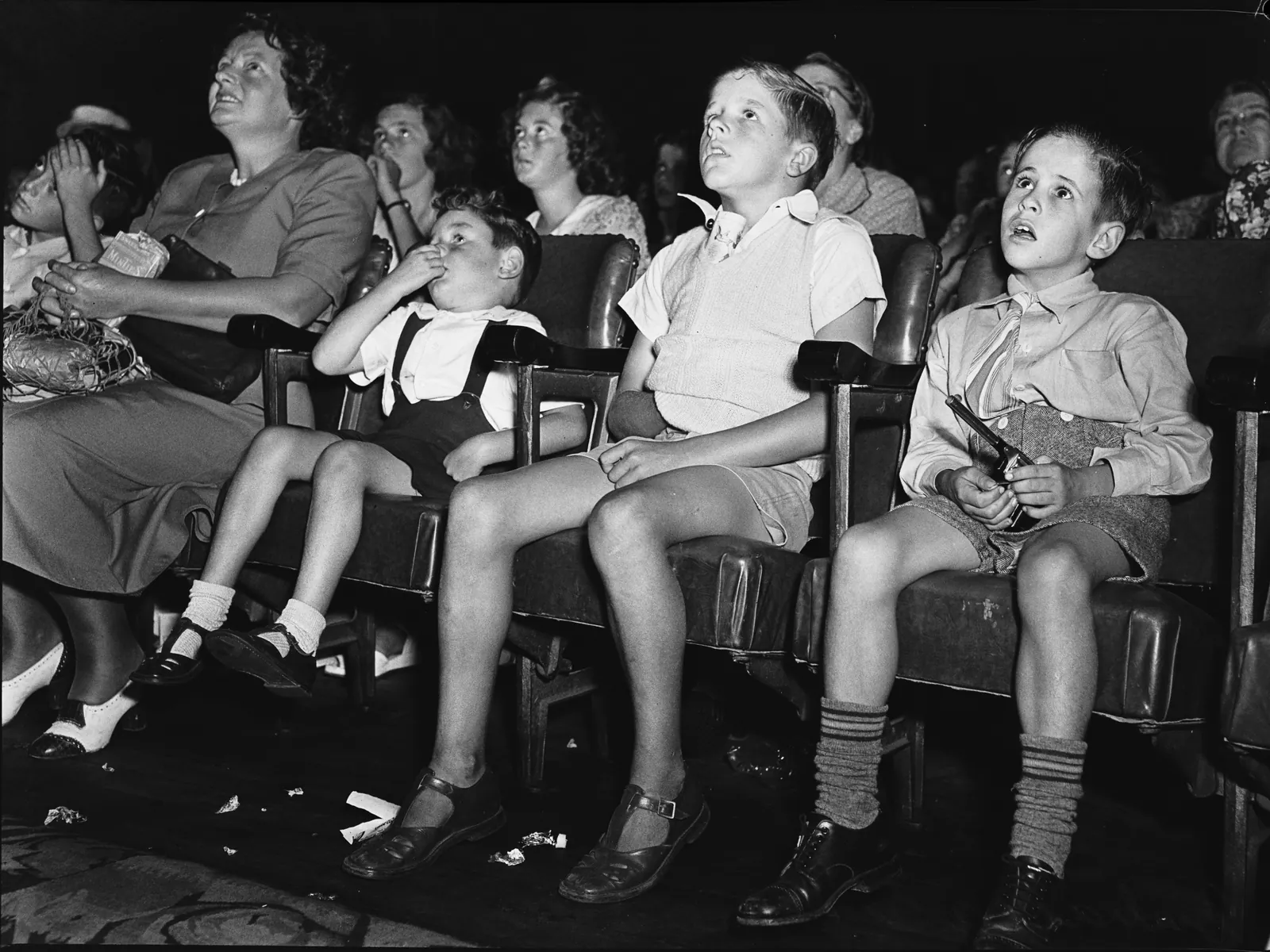
In the stalls of a picture theatre a mother with a string bag and three boys in shorts and long socks stare up at the screen; the smallest has his thumb in his mouth, the boy on the right holds a toy pistol, and sweet papers lie on the floor.
At a Walt Disney film, the Embassy Theatre, Sydney, January 1949. Ivan Ive; Mitchell Library, State Library of New South Wales, ON 388/52/91

Astor Mickey Mouse Radios

1933–37p. 121

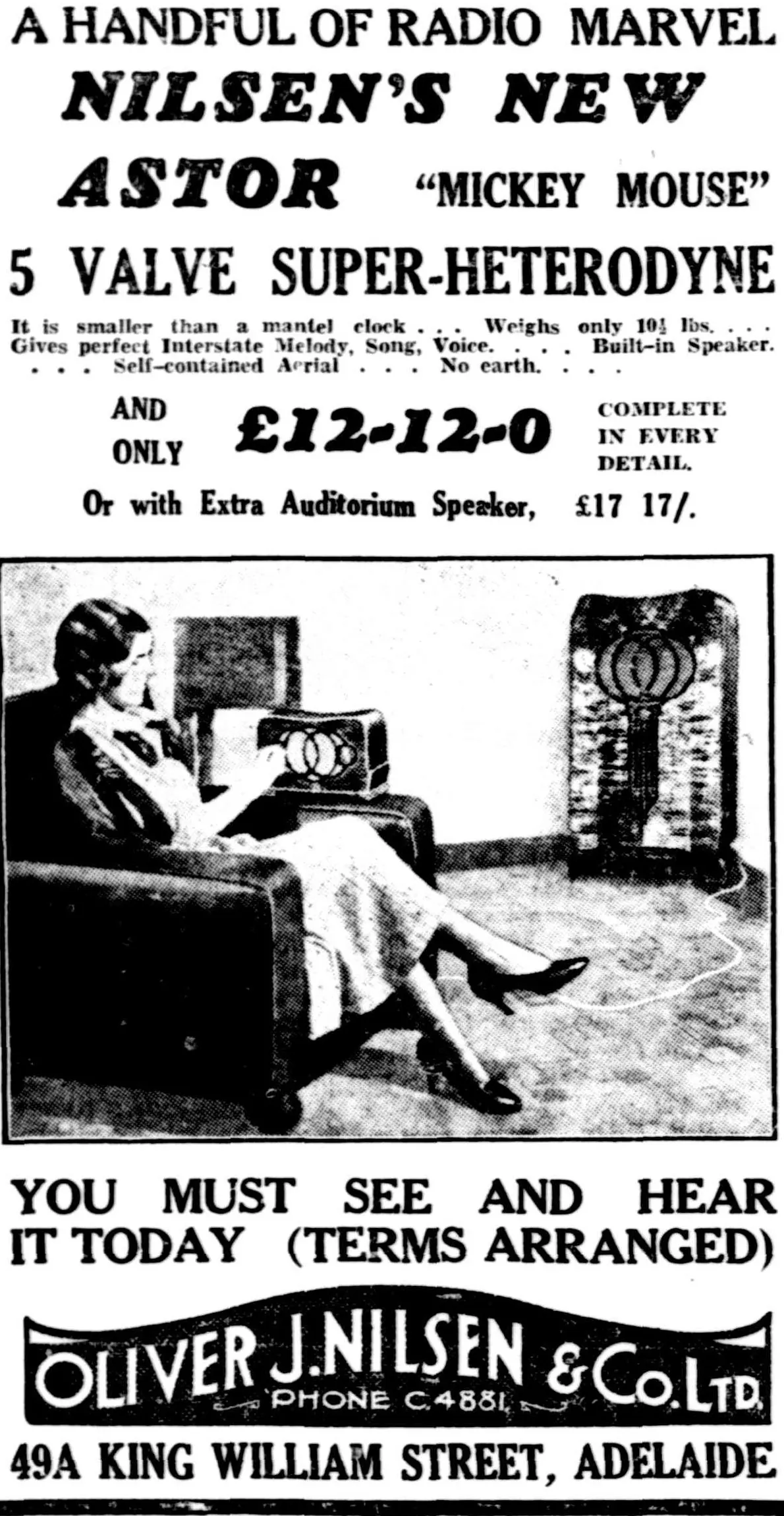
In December 1933 Radio Corporation of South Melbourne, which made Astor radios, brought out a five-valve set smaller than a mantel clock, for twelve guineas, and called it the Mickey Mouse: “No wonder it is called the ‘Astor’ Mickey Mouse,” said an advertisement, because it was tiny. A “Minnie Mouse” extension speaker cost five guineas more. The radios sold, and the name stuck: Trove has some four thousand advertisements and notices for them before 1955.

In April 1936 the company applied to register “Mickey Mouse” and “Minnie Mouse” as its trade marks. Disney opposed it and won, and in August 1937 the High Court of Australia refused the registration too, in Radio Corporation Pty Ltd v Disney. After that the radios were Astor Mickeys. Radio Corporation’s chairman, Arthur Warner, went on to own GTV-9, and when television came, Groves notes, Disney’s programmes went to HSV-7.

“It is immoral and unethical that [Astor] should deliberately lift words which are the invention of Disney, and around which he has built up a profitable business.”

A small chocolate-brown bakelite radio, its front moulded in scallops round two overlapping circles over a woven speaker cloth, with a square ivory dial in the middle and a knob each side.
An Astor Mickey, the Model EG, about 1939. Its name is moulded on the base, and the dial pinned over the chapters is drawn from its dial. Photograph Rodney Start, Museums Victoria, ST 28153, CC BY 4.0
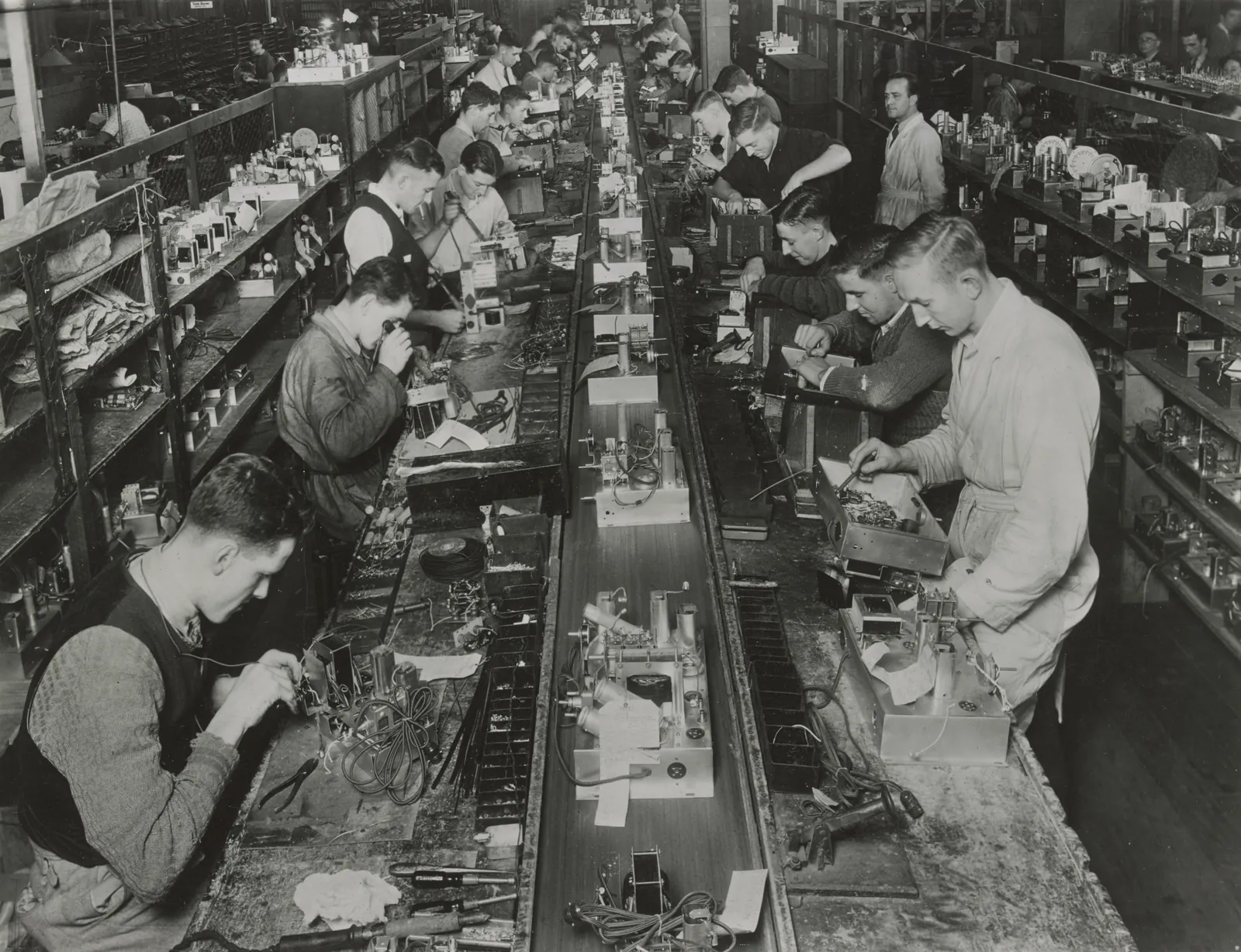
Looking down a long double workbench in a radio factory: rows of young men in shirtsleeves and cardigans wire and solder radio chassis, with shelves of parts on either side and a foreman in a white coat at the back.
Radio Corporation’s factory in South Melbourne, where the Astor Mickeys were made, in the 1930s. State Library Victoria, MS10808/PHO10
A newspaper advertisement: a handful of radio marvel, Nilsen’s new Astor Mickey Mouse 5 valve super-heterodyne, smaller than a mantel clock, £12-12-0, over a photograph of a woman in an armchair beside the little set, with a big console radio behind her.
The Astor Mickey Mouse goes on sale in Adelaide, December 1933. The Advertiser, Adelaide, 9 December 1933, page 9, via Trove

Mickey Mouse Clubs (Pre-Television)

1930–36p. 127

The first Mickey Mouse club the papers record met at the Princess Theatre in Launceston on Saturday 28 June 1930. Its badges cost twopence and the money went to the Children’s Hospital. Within months there were clubs in every capital and in country towns from Geraldton to Broken Hill, where two police had to be called to the first meeting. West’s Olympia in Adelaide had over 4,000 members by October.

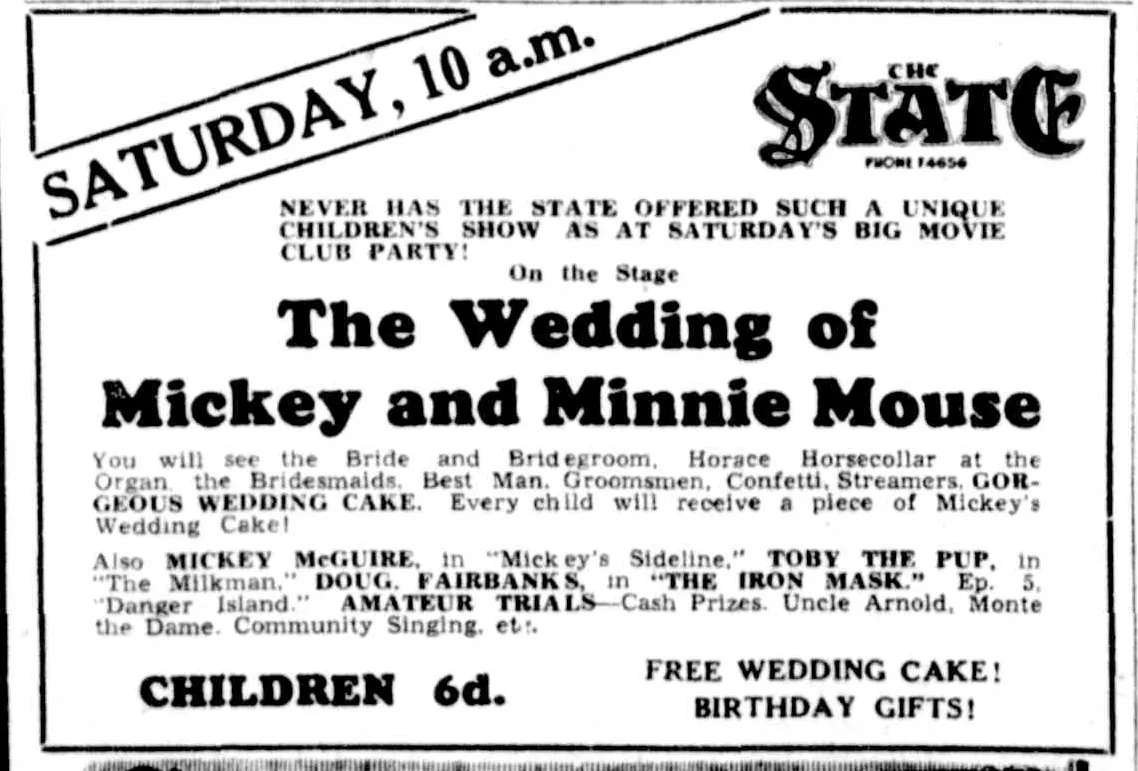
In Melbourne the State Theatre ran a Mickey Mouse Movie Club on Saturday mornings: threepence, with balloons, sweets, community singing and Uncle Arnold. In the Depression its manager, Reg Pollard, “father to more than 2000 children” every Saturday, had them bring potatoes, onions and toys for the unemployed. In 1932 the clubs began marrying Mickey and Minnie on stage, an Australian invention, Groves says. And in 1936 Mickey went on the air, on 2GB in Sydney and 3DB in Melbourne, with clubs sponsored by Pick-Me-Up condiments and orders from Disney that Mickey “must always appear in a favorable light” and that nobody imitate his voice.

“In encouraging the children of your Mickey Mouse Club to bring in their weekly gifts, I feel you are doing a double service.”

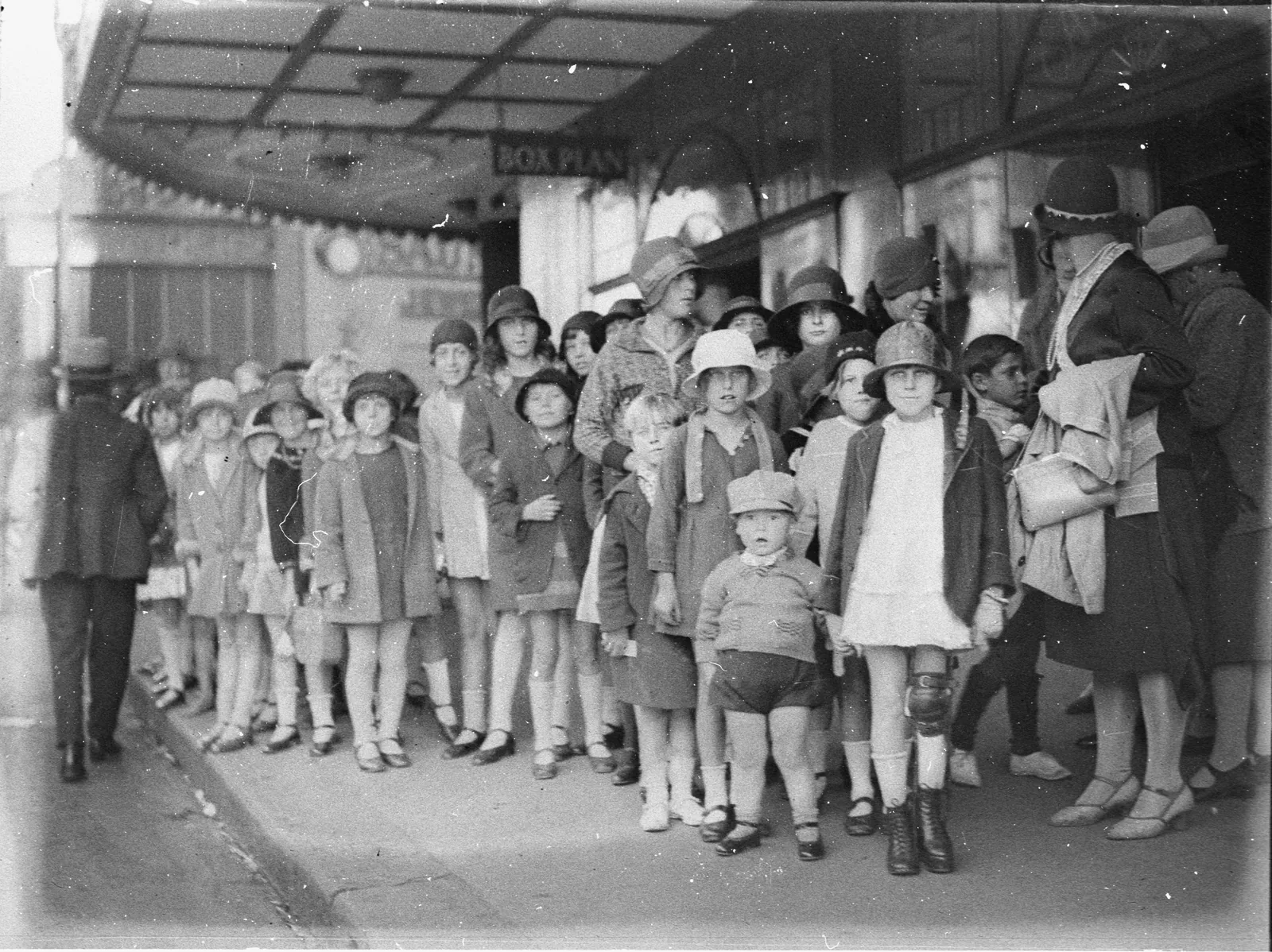
A crowd of children in cloche hats, felt hats and coats queues along the footpath under a picture theatre’s glass awning, with a few mothers and a toddler in a cap at the front.
Children queue for a matinee at the Empire Theatre, Sydney, about 1930. Ted Hood; Mitchell Library, State Library of New South Wales, Home and Away 3352
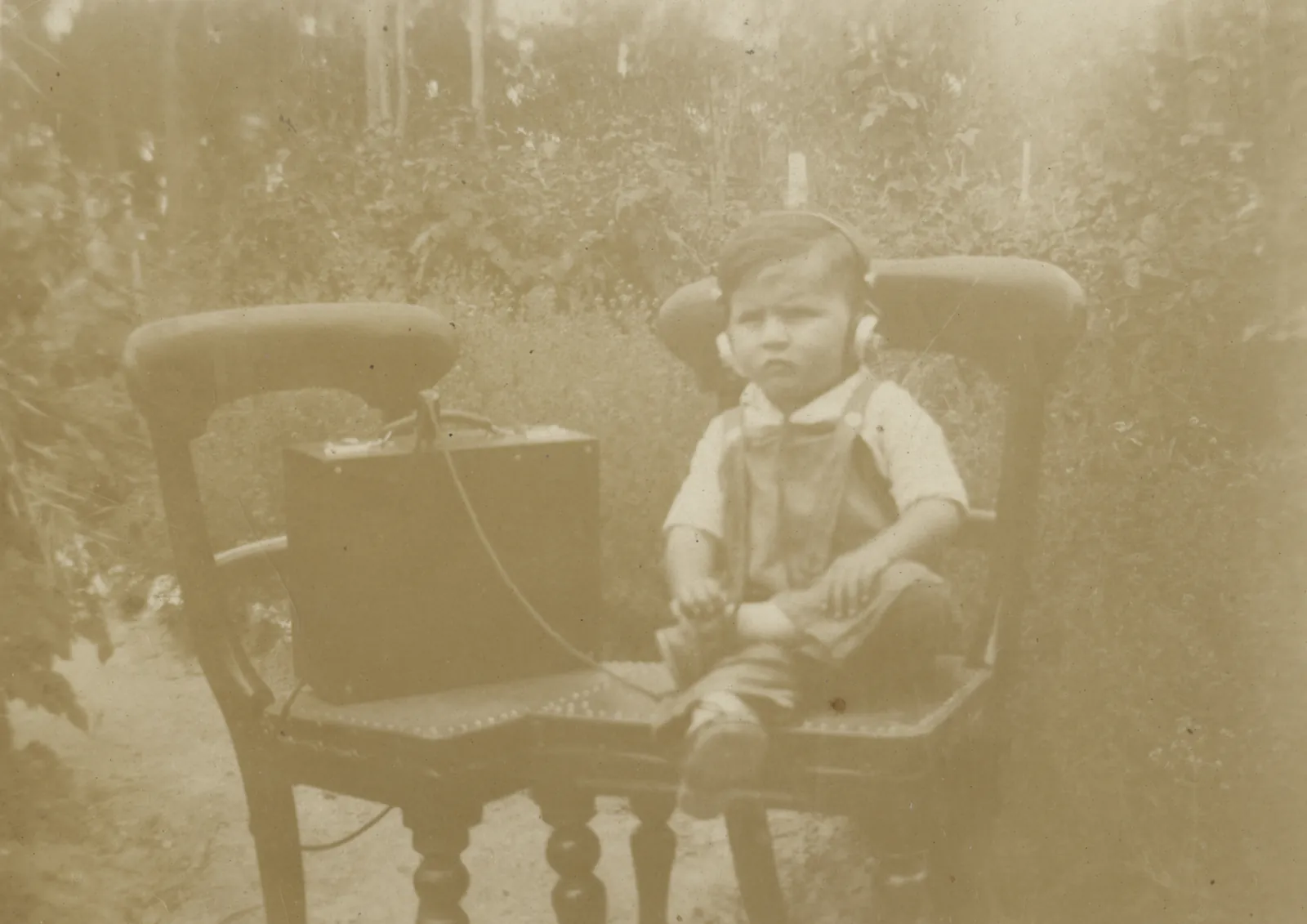
A small boy in a shirt and overalls sits scowling on a big carved chair in a garden, wearing headphones wired to a box wireless set on the seat beside him.
“George listening in”, Mount Evelyn, Victoria, 1931. State Library Victoria, H2017.169/2
A newspaper advertisement in bold capitals: State Theatre Mickey Mouse Movie Club party on Saturday will be wonderful! Let’s Go Native, a new Mickey Mouse cartoon, a serial, community singing, Uncle Arnold, free balloons, free sweets, children 3d.
The State Theatre’s Mickey Mouse Movie Club, Melbourne, in The Argus of 29 October 1930. Argus, 29 October 1930, page 20, via Trove
A newspaper advertisement under a diagonal banner, Saturday, 10 a.m., and the State’s script name: on the stage, The Wedding of Mickey and Minnie Mouse, with the bride and bridegroom, Horace Horsecollar at the organ, bridesmaids, confetti and a gorgeous wedding cake; children 6d.
The State Theatre marries Mickey and Minnie on its stage, Saturday 11 June 1932. The Herald, Melbourne, 9 June 1932, page 10, via Trove

The Voice of Minnie Mouse

1936p. 133

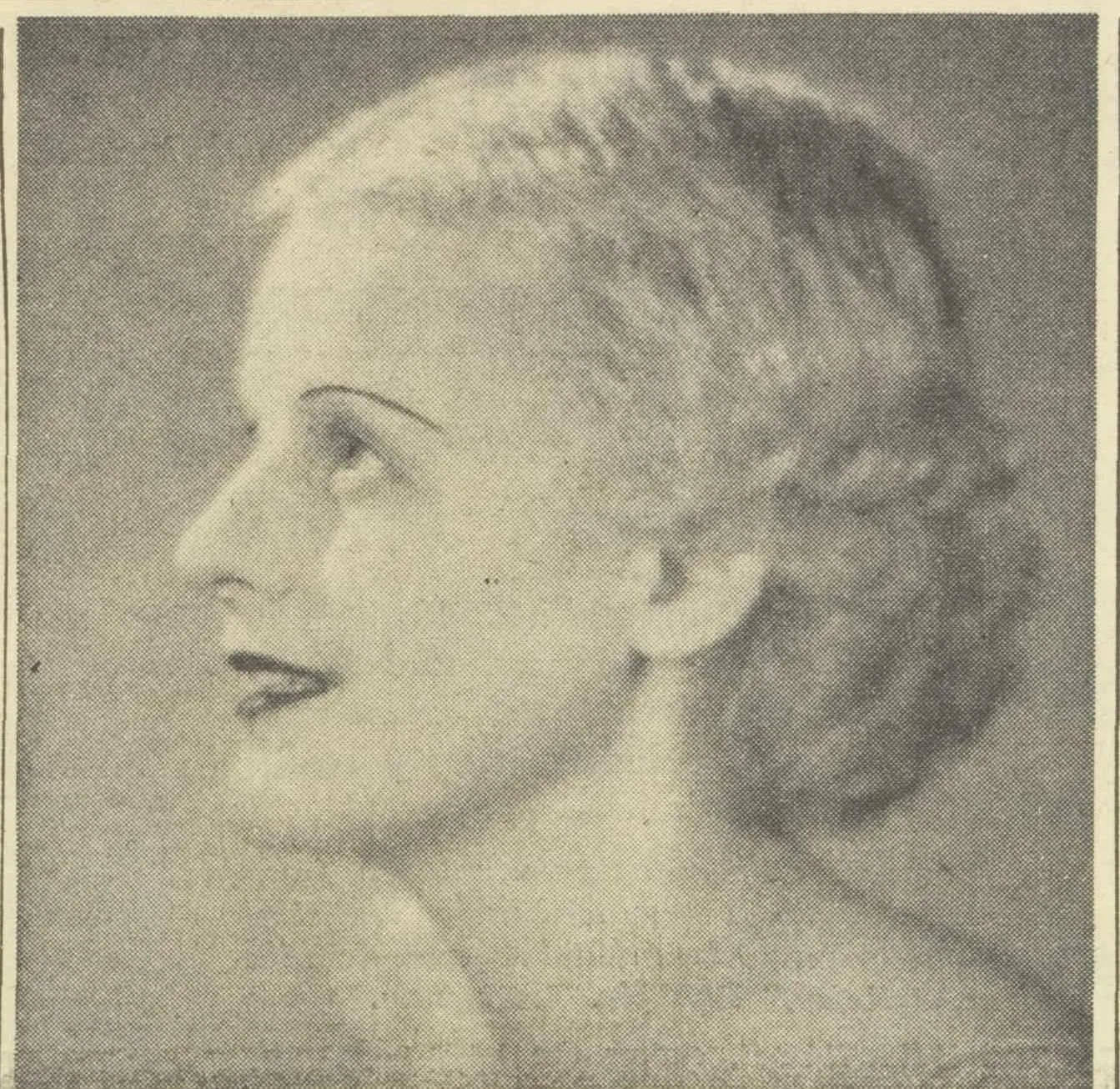
In 1936 the voice of Minnie Mouse came to Australia, or one of them: Gay Seabrook, an American actress touring for J. C. Williamson in Three Men on a Horse, at the King’s in Melbourne from March, the Theatre Royal in Sydney from May and His Majesty’s in Brisbane in July. Disney had heard her in a baby-talk part on the radio, she told the Sydney Mail, and she did not claim to be the first Minnie: that was “a girl in the studio, one of the staff known as ‘an inker’”. Pick-Me-Up, the sponsor of the radio Mickey Mouse clubs, put her on the air in Sydney in June.

The Australian in the cast was elsewhere. Linda Parker of Kongwak, in South Gippsland, a singer on BBC radio from 1934, was remembered by the Herald in 1946 as the vocalist who “reproduced the sounds of one of the ‘three little pigs’ in a Walt Disney silly symphony”.

A newspaper studio portrait of a young woman in profile, looking up, her fair hair waved close to her head.
Gay Seabrook, billed as “the voice of Minnie Mouse”, in The Australian Women’s Weekly, June 1936. The Australian Women’s Weekly, 6 June 1936, page 57, via Trove

The Mickey Mouse Club on Television

1957–61p. 136

Disney’s Mickey Mouse Club and Disneyland came to Australian television in its first months: HSV-7 in Melbourne began the Club on Monday 21 January 1957, at half past five on weekdays. From 1958 the State Savings Bank of Victoria sponsored it, at £3,200 a month and rising: its marketing man, Trevor Craddock, wanted to “humanise” the bank. Children who opened an account joined the bank’s SSBee Club and so became members of the Mickey Mouse Club; the local host was a radio man, Doug Elliot, Uncle Doug. Some 300,000 tin money boxes, made in Melbourne by Gadsden, were sold through the bank’s branches and Coles. Gil Matthews, later the drummer of Billy Thorpe and the Aztecs, was Australia’s first honorary Mouseketeer.

In the Moomba procession of 1959 the bank’s float carried a money box the size of a garden shed, with the Mickey Mouse Club aboard, “escorted by 70 local school children”, before what the bank’s staff magazine called a record half a million people.

The Mouseketeers in Australia

1959–60p. 145

The Mouseketeers landed at Mascot on 6 May 1959, for the promoter Bill Watson of Headliners: Jimmie Dodd with Sharon Baird, Bobby Burgess, Tommy Cole, Cubby O’Brien, Karen Pendleton and Doreen Tracey. More than 3,000 children met them in Melbourne the next day. They gave sixteen concerts at Festival Hall, the first to a near-capacity 6,000, with the Diamonds and Frank Randow’s performing dogs on the bill, and sixteen more at the Sydney Stadium. Not everything went to plan. “The first surprise about the Mouseketeers is their appearance,” The Australian Women’s Weekly found: they were older than the children expected. And a former nightclub owner, Sammy Lee, sued for £10,000 of the profits; the promoters’ counsel said he had been “only a baggage man on the tour”.

In May 1960 Watson brought some of them back in a package with Sheena, Queen of the Jungle, and the Cisco Kid, whose .45 was impounded by Customs at Mascot and whose horse threw him onto the bitumen there in front of a thousand fans.

King Mickey Is Dead

1977p. 151

Moomba began in 1955, Melbourne’s autumn festival, with its procession down Swanston Street on Labour Day; it took its name from the Australian Aborigines’ League’s stage show of 1951, An Aboriginal Moomba, which Bill Onus had named. From 1967 it crowned a King each year beside its Queen, an entertainer or a sportsman. For 1977, after three months of negotiation with Disney, it chose Mickey Mouse, in a festival whose theme was a salute to Walt Disney, and HSV-7 had just bought The New Mickey Mouse Club. The news was out by 7 January. Within two days it was out that Mickey was a woman, Patricia O’Carroll, a Disney employee; since a woman’s voice must not come out of Mickey, the comedian “Ugly” Dave Gray went beside him as court jester to do the talking.

Melbourne objected. Terry Lane’s talkback programme on 3LO had a record number of callers. Community Art Workers and the Blinky Bill Brigade put up a rival, Dorothy Wall’s koala, “Blinky Bill, the people’s King of Moomba”, sold T-shirts of him kicking a mouse, crowned him in the City Square on 22 February and tried to gatecrash Mickey’s coronation by the Lord Mayor at the Hilton.

“We have a strong cultural heritage and will not bow to more imperialist penetration.”

On Labour Day, Monday 14 March 1977, while the Centenary Test went on at the MCG, King Mickey rode down Swanston Street in an open car with his jester and a police escort. A Blinky Bill float got into the procession, and a Brigade member came as a rat. At Princes Bridge one of two clowns behind the car pushed a pie into Mickey’s face. The clowns were charged; the magistrate found the pies in poor taste and dismissed the charges. The next King was Bert Newton, the first born in Melbourne, from a shortlist with no foreigners and no cartoons on it, and the playwright John Romeril, outraged by “this rodent from California”, wrote a musical about it all, Mickey’s Moomba, which the Australian Performing Group staged at the Pram Factory in 1979.

What could better show the end of Disney’s affair with Australia, Groves asks: “We went from loving them in the late 1950s and early 1960s with The Mickey Mouse Club on television, to hating them in the 1970s.”

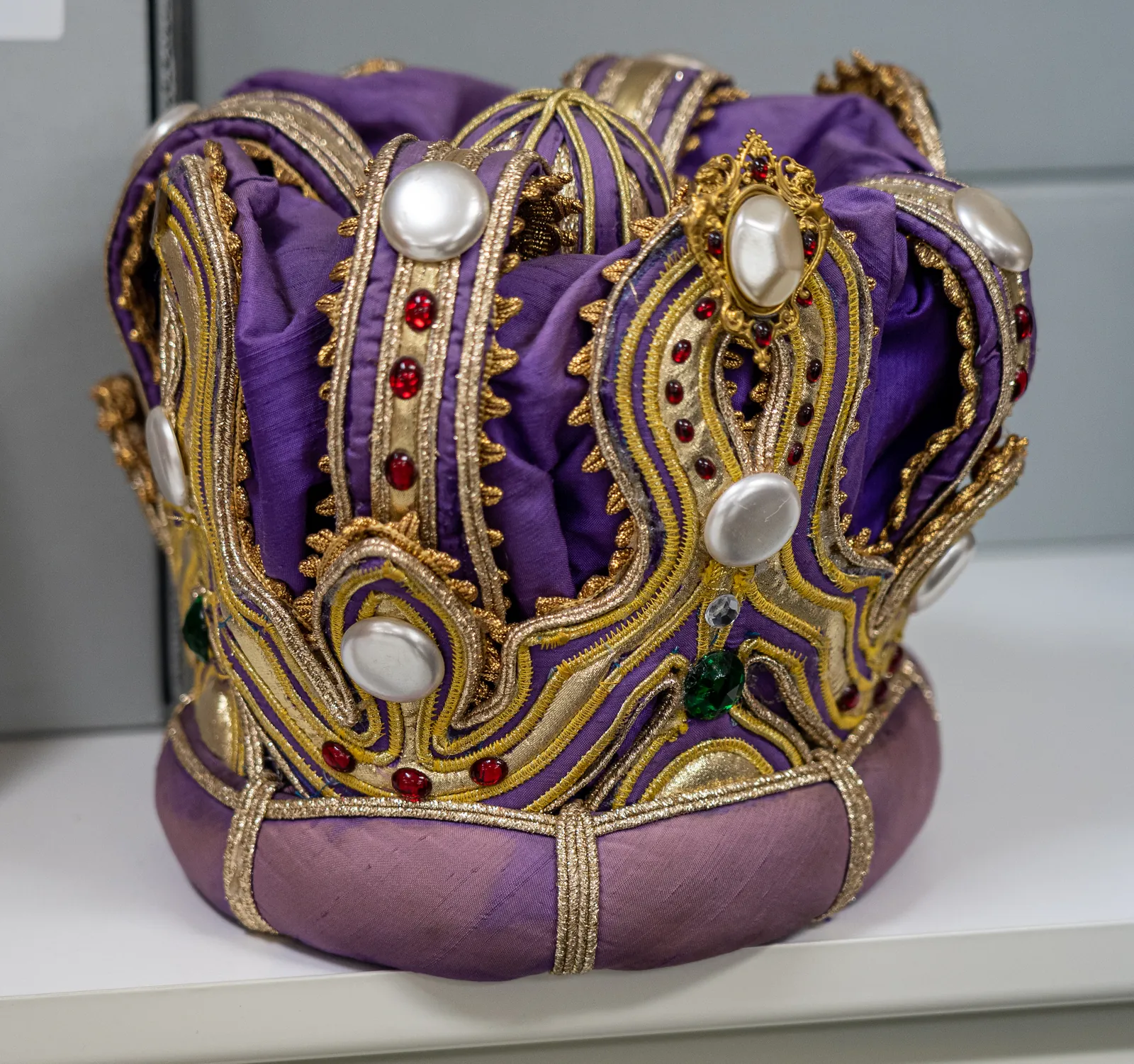
A King of Moomba’s crown on a store-room shelf: a cap of purple silk under arches of gold braid, set with pearls and red and green stones.
A King of Moomba’s crown, from the 1980s, in the City of Melbourne’s collection. Photograph Stephen Bain, CC BY-SA 4.0, via Wikimedia Commons (cropped)

The Kings of Moomba

  1. 1967Robert Morley
  2. 1968Alfred Marks
  3. 1969Tito Gobbi
  4. 1970Johnny Famechon
  5. 1971Oleg Popov
  6. 1972Johnny Farnham
  7. 1973Pastor Doug Nicholls
  8. 1974Robert Helpmann
  9. 1975Rolf Harris
  10. 1976Barry Crocker
  11. 1977Mickey Mouse
  12. 1978Bert Newton
  13. 1979Graham Kennedy
  14. 1980Paul Cronin
  15. 1981Lou Richards
  16. 1982Frank Thring
  17. 1983Daryl Somers
  18. 1984Kevin Bartlett
  19. 1985Ian Meldrum
  20. 1986Peter Brock
  21. 1987Paul McNamee, the last

The book

Walt Disney’s Forgotten Australia

From Mickey’s Kangaroo to Outback At Ya!

The cover of Walt Disney’s Forgotten Australia: the title and Derham Groves’s name in white and pink on a blue panel, framed by a pattern of crimson triangles.

The first book about Walt Disney in Australia, in three chapters: Disney’s Australia on the screen, Disney in Australia off it, and Mickey Mouse in Australian life from 1927 to 1977. Its notes, free to read on the publisher’s site, run to 635 and are its source list: the papers, the National Archives, and Groves’s own interviews with the people who were there, from Mouseketeers to the man who sponsored them.

Derham Groves was born in Geelong in 1956, saw Toby Tyler at the local Pix as his first film and saved in a Donald Duck money box. At the University of Minnesota he tutored in Karal Ann Marling’s Disney class, and the book is dedicated to her. He is a Senior Fellow in the Faculty of Architecture, Building and Planning at the University of Melbourne.

Publisher
Palgrave Macmillan (Springer Nature), in the Palgrave Pivot series
Published
Hardback and eBook, January 2025; paperback, January 2026
Extent
xxvii and 179 pages, 52 black-and-white illustrations
Hardback
ISBN 978-3-031-78771-3
Paperback
ISBN 978-3-031-78774-4
eBook
ISBN 978-3-031-78772-0
Foreword
Lisa Fischman

Each chapter can also be bought on its own from the publisher. The National Library of Australia holds the eBook.

“This is no Mickey Mouse book.”

“Derham Groves has been the go-to expert for information on all things regarding Disney and Australia, uncovering material that has never surfaced elsewhere.”

Derham Groves on the book

kingofmoomba.au is about a book, Derham Groves’s Walt Disney’s Forgotten Australia (Palgrave Macmillan, 2025). It is not connected with The Walt Disney Company. Disney’s films and characters are named here in words only, and none of its artwork is shown.

Sources, read 12 October 2026

Where this comes from

The Australian side of each section is from the newspapers of the day, read on the National Library’s Trove; from the book’s own notes, abstracts and the passages Google Books shows of it; from Derham Groves’s article in Pursuit and his talk on the Skull Rock Podcast; and from the libraries, archives and museums named under each row. Each row names its sources under it. Words still in copyright are quoted short. Where the sources disagree, the page goes with the record made nearest the event, and the disagreement is here:

  • How many wallabies. Smith’s Weekly (1935) and the Sun News-Pictorial (1934) have three, Leapo, Hoppo and Poucho, the joey born on the voyage; The Advertiser (1934) has two adults and a joey; the book and Pursuit have the pair, Hoppo and Leapo, and a joey found in Hoppo’s pouch.
  • Where Buring was from. The papers of 1934–35 call him a Sydney wine merchant; Pursuit calls him a South Australian winemaker. He was born in South Australia and his firm was in Sydney.
  • When MacRobertson-Miller began. The book says 1927; the Australian Dictionary of Biography says the company was registered in 1928. No paper before 1955 calls it Mickey Mouse Airlines.
  • When the Milottes came. Pursuit says 1959; the papers have them landing in Sydney in May 1955, and 1959 is the year of the film.
  • Robert Bettles’s age: twelve in February 1975 (The Australian Women’s Weekly), thirteen in December 1975 (the same paper). The Weekly said the film was made in New South Wales; the town scenes were shot at Chiltern, in Victoria.
  • Born to Run in Australia: D23 has it released here as Harness Fever in 1977; Sydney’s cinemas showed it at Easter 1979.
  • The Emu’s title: the book’s contents say Voyage, Disney’s own records Journey, and the Australian programme guides Valley of the Emus.
  • Five Mile Creek’s first Australian showing: the American date, November 1983, is often given; Seven showed it in Melbourne in 1984 and in Sydney from April 1985.
  • Jake in The Rescuers Down Under is a kangaroo mouse to Groves and the Canberra Times, and a hopping mouse to Wikipedia.
  • The voice of Minnie. Gay Seabrook was billed as Minnie’s voice in 1936 and said she was not the first; Disney’s records credit Marcellite Garner, the inker she described. Fox publicity the same year gave the part to Carol Tevis.
  • The Mouseketeers of 1959: The Australian Women’s Weekly of April and May 1959 lists six with Jimmie Dodd, Sharon Baird among them, as does Groves’s own post of 2007; the book and Pursuit have five.
  • “Imperial” or “imperialist” penetration: the book’s foreword has “imperial penetration”; Community Art Workers typed “imperialist penetration” and wrote in “more” by hand, which is how the book quotes it.
  • The pies: the book has two clowns throwing cream pies; the City of Melbourne’s catalogue and its history of Moomba have one of two clowns pushing a pie into Mickey’s face at Princes Bridge. The history says they were fined; the court report the book cites, in The Age of 25 March 1977, cleared them.
  • The crowd on 14 March 1977: “more than 200,000” in Army, 31 March 1977, the nearest record we could read; over 600,000 in the book.
  • Mickey’s coronation: the book has the Lord Mayor crowning him at the Hilton; we found no record of the day it happened.
  • Mickey’s Moomba: the book dates the play 1978; the reviews it cites are of February 1979.
  • The book’s length: 179 pages to the publisher and the National Library, 206 or 208 to Amazon, which counts the 27 pages of front matter.